 Tom McParland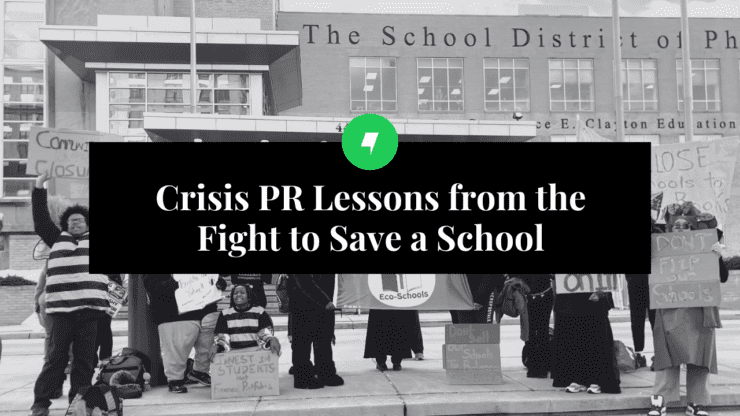
One thing I love about working for Maven is that we are encouraged to dedicate work hours to volunteer for causes that are important to us. That’s how, in early February, I found myself giving a virtual media training to about two dozen students from Lankenau Environmental Science Magnet High School in Roxborough.
Lankenau, where my wife works as a special education teacher and faculty advisory to the cherished birding club, was one of 20 Philadelphia schools recommended for closure under the School District’s proposed Facilities Planning Process. That decision, announced in mid-January, set off a whirlwind, weeks-long scramble to save the school ahead of an expected School Board vote later this winter.
Since then, I’ve leveraged my background in media, communications, and writing to engage community stakeholders, help students tell their stories, and coordinate media outreach around a student-led environmental showcase designed to put Lankenau’s unique programing on full display.
While the work has been deeply rewarding, it’s also served as a good reminder of some core truths about crisis communications. Today, I’ll take a moment to reflect on those lessons and how they can help a message break through in the midst of a crisis.
Assessing the Story
The first thing to do when entering a crisis situation is to take a step back and try to understand the entire landscape—by assessing not only the school’s story, but also School District’s process, the timeline, key decision-makers, and likely pressure points where we will be able to leverage our messaging to the greatest effect.
For Lankenau, that meant getting up to speed very quickly on what makes the school so unique. The answer, it turns out, is quite a bit.
Lankenau sits directly adjacent to 400 acres of natural wildland, where much of the learning takes place. After a years-long certification process, the school now operates the only accredited three-year Agriculture, Environmental and Natural Resources Career and Technical Education program in Pennsylvania. Students raise and release live trout, keep bees for studying the efficacy of bacteria-fighting honey, and maintain their own detailed aquaponic systems. The school also boasts a rare 100% graduation rate, and its deep community roots help position students for environmental internships and job opportunities they would not get anyplace else.
It quickly became clear students’ successes were the story, and understanding their experiences at the outset was key to shaping the public narrative for the fight to come.
Being the Calm in the Storm
Crisis moments have a way of generating noise, with fear, urgency, and competing voices all pulling in different directions. In this setting, the most valuable qualities a communications specialist can bring to the table are level judgment, a steady hand, and a clear gameplan for how to execute a coherent messaging strategy.
Of course, that’s easier said than done. In this situation, I’m working with kids who are worried about their social and academic futures, parents who feel blindsided, and teachers who have invested their entire careers into building something special for their students. Emotions are high, but I’ve found that the best outcomes come when all parties involved take a moment to slow down and think clearly.
For us, that meant channeling passions productively, by organizing a student showcase, writing well-crafted letters to community partners, and delivering our message consistently, and with discipline, in the media.
The Work Continues
We continue to adapt our tactics and are always looking for new pressure points to amplify our message. But the foundation we laid in those early weeks has set the stage for an ever-evolving fight, as more community members are activated and political voices start to enter the conversation. Each development can feel like a complete reset, but amid the noise, the key is never to lose sight of our ultimate goal.
For Lankenau, the aim has never changed: save the school, preserve its vital programming, and protect the unique education and opportunities that Lankenau affords to its students.
Whatever happens next, the students of Lankenau have shown that they are more than capable of making their case, with poise, passion, and great pride in what they’ve built. As one Philadelphia City Councilmember told them recently, “You are not the leaders of tomorrow. You are the leaders of now.”
Those words are a reminder that, in a crisis, the best stories are heartfelt and authentic. My job is just to make sure that those important voices are heard above the noise.
Posted In Crisis Communications, Media Relations