 Jeffrey Barg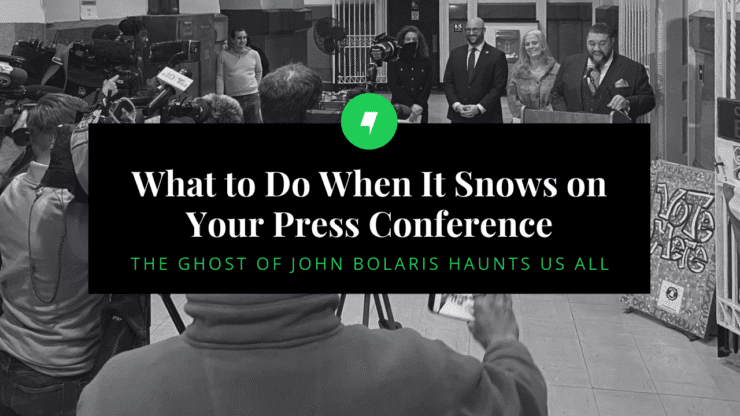
You’re planning a press conference.
The concept is rock solid, the speakers are prepped and plans are in place.
But then Mother Nature has plans of her own.
Guess whose plans are going to win?
That was the situation our team was staring down recently as the biggest winter storm in a decade approached Philadelphia. The Philadelphia City Commissioners were set to announce a monthlong push for 250 new election poll workers in honor of America’s 250th birthday on Tuesday, January 27, also known as Help America Vote Day—a national celebration of the people who make elections happen across the country.
But in the wee hours of Sunday, January 25, snow started to fall.
As weather forecasts built throughout the week, we made contingency plans. If we saw the double-digit accumulation many were predicting, the press conference would obviously be a no-go.
On the other hand, there’s a short and treacherous list of things Philadelphians love to talk about when they talk about snow:
- The Blizzard of ’96.
- Sledding down the Art Museum steps.
- Predicted snowstorms that never came to pass.
(Note that this list doesn’t include any mention of Santa and snowballs, which people only talk about if they’re not from here.)
Everyone has a story about No. 3. Few things feel as rotten as making big plans, canceling those big plans because of a forecast, and then having the snow never materialize.
Because of the storm’s timing, we knew we were unlikely to have all the information we needed by the time we had to make the call. But we also weighed the consequences of each option: If we postponed the press conference, we could do it a week later, but it would no longer be Help America Vote Day. We’d have lost our time hook. On the other hand, if the snow was bad enough that no one could get to the press conference, we’d be talking to ourselves.
We huddled on Sunday night, when snow was still falling. We didn’t know what the final accumulation would be, but it was clear by then that the storm wasn’t a bust. No meteorologists would lose their jobs this time.
We decided to postpone, but only because we had one crucial factor on our side: The press conference was a good enough story on its own. It didn’t need the time hook to be relevant.
Blitzing neighborhoods to sign up 250 new poll workers in honor of the nation’s 250th birthday? That story tells itself. It supports democracy, it boosts civic engagement, it’s neighbors helping neighbors. It’s good, important work.
Time proved that postponing was the right call. On Monday, the mayor announced that the city would remain closed for business on Tuesday, so our press conference—which we were planning for City Hall—couldn’t have happened even if we wanted it to.
And when we had the event a week later? TV cameras from all four major networks showed up, and we got the message out and heard.
PR planning involves strategy, research and a dollop of luck. But first and foremost, you need a compelling story. Make sure that foundation is solid, and anything that builds on top of it will glisten like freshly fallen … well, you know.
Posted In Media Relations, Public Relations